Introduction
An employee spots something wrong: a safety hazard, a harassment pattern, numbers that don't add up. Then comes the hesitation. Will anyone believe me? Will this come back on me?
That hesitation is common. A 2024 Gallup survey of over 21,000 U.S. employees found that 23% had witnessed unethical behavior at work, yet 57% of them never reported it. Fear of retaliation and the belief that nothing would change were top reasons for staying silent.
"Confidential" and "anonymous" reporting sound interchangeable. They aren't. Mixing up the terms can quietly erode trust the moment an employee discovers their "anonymous" report wasn't actually untraceable.
This guide breaks down what each term really means, where they overlap, and how to build a reporting process employees actually believe in.
Key Takeaways
- Confidential reporting limits who sees the reporter’s identity; anonymous reporting means no one can identify them.
- A credible process explains access, follow-up, investigation steps, and retaliation protections upfront.
- Technology, policy, and training determine trust more than the channel’s label.
- Federal and state whistleblower rules (SOX, Dodd-Frank, OSHA, state laws) shape how reporting channels must operate.
What Do Confidential and Anonymous Reporting Mean?
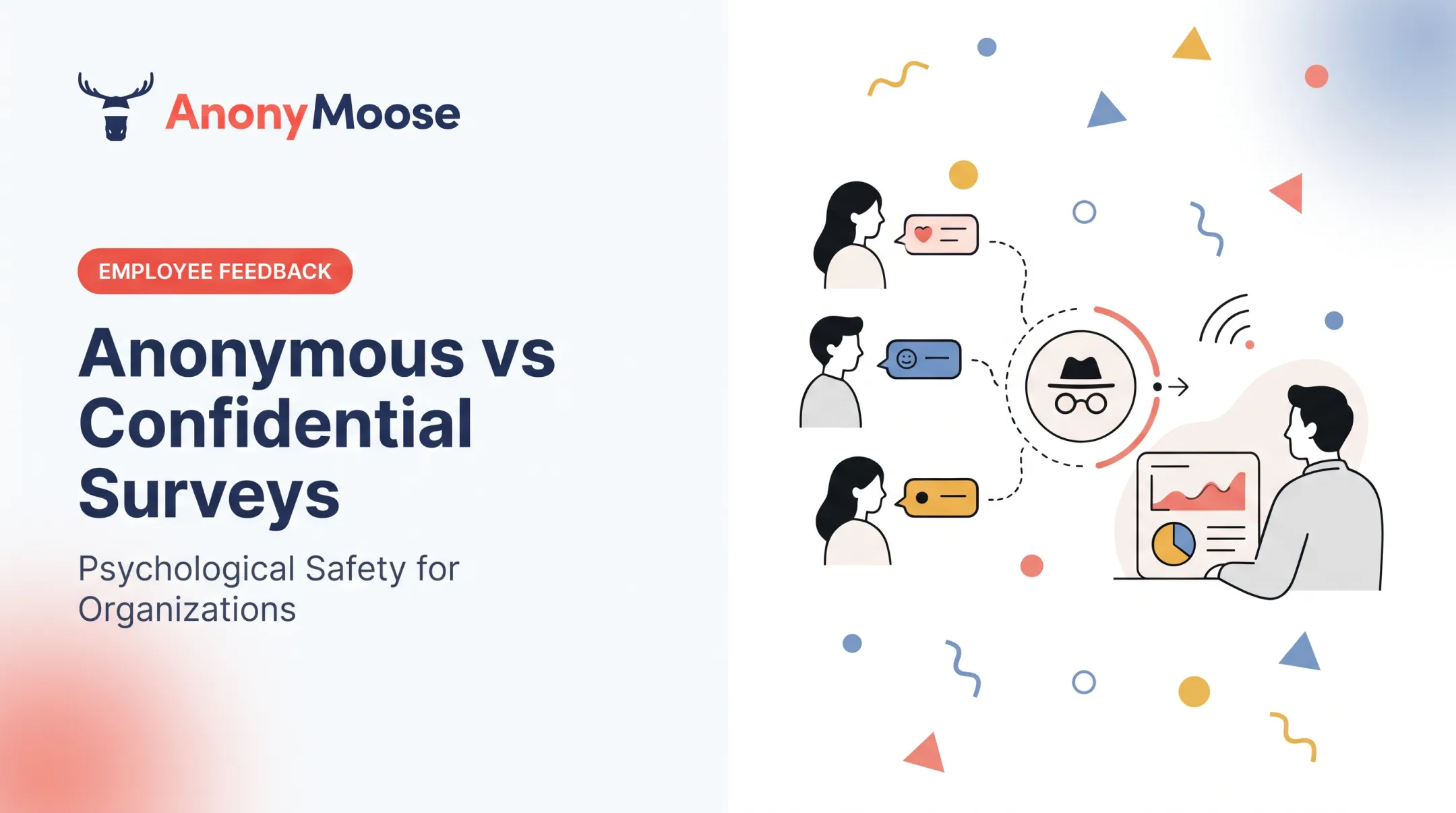
Confidential reporting means the reporter identifies themselves to a designated recipient, but that identity stays restricted to authorized people. Think HR, legal, or a compliance officer. The organization knows who filed the report; it just controls who else finds out.
Anonymous reporting strips identifying information from the submission. The reporter doesn't provide a name, and a properly designed system prevents the organization from tracing the report back to a person.
In short:
- Confidential: identity known to a limited set of authorized people
- Anonymous: identity not collected—and not traceable through the channel
- Neither is absolute: legal processes can still force disclosure in defined cases
Even the SEC, which runs one of the most established whistleblower programs in the country, notes that it protects identities "to the fullest extent possible" but may need to disclose them in specified circumstances. That same caveat applies to most internal workplace channels.
Why the Distinction Affects Investigations
Confidential channels make follow-up easier:
- Investigators can ask clarifying questions directly
- Reporters can receive progress updates
- Evidence gaps can be closed through dialogue
Anonymous channels trade some of that back-and-forth for a lower psychological barrier to reporting. Employees worried about being outed may choose anonymity even if it means an investigator can't circle back for details.
Spell out your actual process, including when disclosure may be legally required. Clear limits build more trust than vague promises of total secrecy.
Confidential vs. Anonymous Reporting: What Is the Difference?
The two models differ in four practical ways:
| Factor | Confidential | Anonymous |
|---|---|---|
| Identity known to organization | Yes, to limited staff | No, by design |
| Two-way follow-up | Straightforward | Possible with the right tech, harder otherwise |
| Risk of identity exposure | Controlled, not eliminated | Low, but not zero |
| Best suited for | Complex cases needing clarification | Sensitive concerns, power-imbalance situations |
"Confidential" doesn't mean nobody knows. It means access is limited and controlled.
"Anonymous" doesn't guarantee a reporter can never be inferred, either. Writing style, timing, device metadata, or a highly specific incident detail can still narrow down who sent a message—even when the platform never records identity.
When Employees Pick One Over the Other
A few real-world scenarios:
- Confidential: A billing discrepancy that needs follow-up documents and clarifying questions.
- Anonymous: Harassment by a direct supervisor, where identification could mean retaliation.
Those choices only work when employees know what each channel actually protects. Organizations should publish a short reporting notice that answers four questions plainly: what information gets collected, who reviews it, whether follow-up is available, and what happens next.
AnonyMoose Hotlines, for example, keep conversation threads open so reporters can get updates or answer questions without revealing who they are.
Why Confidential and Anonymous Reporting Matter
Reporting channels exist to surface problems before they escalate: safety hazards, harassment, fraud, conflicts of interest, discrimination. The catch is that most of this never gets reported through formal channels in the first place.
The EEOC's review of workplace harassment studies found that roughly 70% of people who experienced harassment never told a supervisor or manager, and 87%-94% never filed a formal complaint. Anticipated disbelief, inaction, and fear of retaliation were the dominant reasons.

That silence has a cost. Researcher Amy Edmondson defines psychological safety as the belief that someone can speak up without being punished or humiliated. When employees don't have that belief, problems stay buried until they become crises.
A confidential, anonymous channel is one of the clearest ways to rebuild that trust. What a trusted channel makes possible:
- Earlier detection of manager misconduct or team dysfunction
- Identification of recurring training gaps or DE&I issues through aggregated themes
- Fewer employees venting frustrations on external sites like Glassdoor instead of internally
One caveat: reporting channels are not emergency services. If someone is in immediate danger, direct them to call 911 or the appropriate emergency line first. Internal reporting tools are built for the step after that, not instead of it.
How to Build a Trusted Confidential and Anonymous Reporting Process
A credible process starts with policy, not technology.
Write the Policy First
Define, in plain language:
- What counts as reportable — harassment, fraud, safety, discrimination, retaliation, ethics violations
- Who can report — employees, contractors, vendors
- Available channels — hotline, web form, designated recipient
- Confidentiality and anonymity limits — be specific, not aspirational
- Anti-retaliation commitments — and how violations get escalated
- Record-retention practices — how long reports and investigation files are kept
Build the Intake Workflow
A report that disappears into a black hole destroys trust faster than no channel at all. Map out:
- Acknowledgment within a set timeframe
- Triage and conflict-of-interest checks before assigning an investigator
- Evidence handling and escalation paths
- Clear closure communication, even if the outcome is limited
Train the People Who Receive Reports
HR, compliance staff, and managers need training on privacy, impartiality, and trauma-informed communication. A poorly handled first conversation can undo months of policy work.
Help Employees Submit Useful Reports
Give employees a simple framework:
- What happened
- When and where
- Who was involved
- What evidence exists
- What outcome they're hoping for
Skip unnecessary personal details.
Align the Policy With Legal Requirements
Several overlapping U.S. laws shape reporting obligations:
- Sarbanes-Oxley Section 806 — protects employees at public companies who report securities fraud
- Sarbanes-Oxley Section 301 — requires audit committees to accept anonymous accounting complaints
- Dodd-Frank Section 922 — created the SEC's whistleblower program
- OSHA Section 11(c) — protects safety-related reports
- State add-ons — California Labor Code 1102.5 and New York Labor Law 740 protect specified internal disclosures
Have qualified counsel review policy language against current federal and state requirements before publishing anything.

How Technology Supports Privacy, Security, and Follow-Up
A policy is only as strong as the system enforcing it. When evaluating a reporting platform, look for:
- Encryption in transit and at rest
- Role-based access so only designated recipients see case details
- Audit logs tracking who accessed what, and when
- Secure hosting with documented incident-response procedures
- Clear data-retention controls
Technical anonymity is only one control. You still need tight internal access limits, careful handling of metadata, and real follow-through on anti-retaliation rules. Even a strong platform fails if managers are not trained to handle what comes through it.
Two-Way Communication Without Identity Exposure
This is where many legacy hotlines fall short. One-shot phone calls give employees no safe way to answer follow-up questions, so cases stall and reporting volume stays low.
AnonyMoose is built for that gap. Openlines and Hotlines allow two-way conversation without any technical path in the platform to expose who sent a message.
A reporter can attach documents or screenshots, answer clarifying questions days later, and still stay unidentified to AnonyMoose and the employer. Cases route to designated HR, legal, or leadership recipients and appear in AnonyMoose Web with urgency, status, notes, and activity history.
Follow-up only works if people can reach the channel. Deskless and frontline employees often lack regular desktop access, so mobile-first reporting matters. That is why AnonyMoose centers phone access across Openlines and Hotlines, along with Polls & Surveys and Broadcasts.

Before you choose a platform, review the vendor’s security documentation, data-processing terms, and admin permission model. Software does not create compliance on its own—your policy, training, and consistent case handling still do the real work.
Frequently Asked Questions
What is confidential reporting?
Confidential reporting restricts access to the reporter's identity and report details to a limited group of authorized people. An authorized recipient, such as HR or legal, may still know who filed the report.
How do I make a confidential report?
Use your organization's approved reporting channel, include specific facts like dates and people involved, and preserve any supporting evidence. Review the channel's privacy notice first so you know exactly what to expect afterward.
Is anonymous reporting really anonymous?
A well-designed system can prevent the organization from ever learning the reporter's identity. That said, writing style, timing, or highly specific incident details can sometimes still offer clues.
What are examples of confidential information in a report?
Examples include the reporter's name and contact details, witness identities, medical or employment records, and specific incident details that could identify someone involved.
What should an anonymous report include?
Include specific facts: dates, locations, roles involved, witnesses, and supporting evidence. Add a safe way to receive follow-up communication without revealing your identity.
How can organizations protect employees from retaliation after a report?
Enforce a clear anti-retaliation policy, restrict access to report details, and train managers on what retaliation looks like. Monitor for adverse treatment afterward and escalate any suspected retaliation immediately.